DTF vs DTG: Matching the Technology to Your Fabric, Colors, and Volume

Search "DTF vs DTG" and the first thing you will notice is that no two guides agree on the numbers. One puts a DTF print at under a dollar; another quotes eight dollars for the same size. Equipment prices are just as scattered — some list a DTG setup near $25,000, others above $200,000. None of these are exactly wrong. They are describing different orders, and that is the part most comparisons skip.
One disclosure before the details: LorinTransfer supplies DTF film. We do not sell DTG machines or ink, which makes it easier to be plain about where each technology wins — and where it does not. If your order is a better fit for DTG, this article will tell you so.
DTG and DTF are not two versions of the same thing. DTG is a narrow, deep tool: it produces the softest, most photographic prints, but only on cotton — and, once you account for the extra steps dark garments require, mostly on light cotton. DTF is a broad tool: it prints across a much broader range of common garment fabrics, handles dark colors and polyester with fewer moving parts, and fits a smaller startup budget. Rather than ask which one is "better," the useful question is which one fits your order mix — the fabric, colors, and volume you actually print.

Two Digital Print Technologies, One Persistent Confusion
DTG (direct-to-garment) prints water-based textile ink straight onto the shirt. On light cotton, the ink soaks into the fibers, which is why the result feels almost like part of the fabric. On dark garments, the machine lays down a white underbase first — a layer of white ink printed underneath the color — and that underbase needs a pretreatment solution applied and cured beforehand to keep the white ink from sinking into the fabric. This is where DTG's two famous limitations come from: it is happiest on cotton, and dark garments cost more and take longer.
DTF (direct-to-film) prints the design onto a PET film instead. The wet ink is coated with an adhesive powder, cured, and then heat-pressed onto the garment. Because the white layer is printed on film rather than sprayed onto fabric, DTF does not depend on the garment absorbing ink. That single difference is what lets DTF work across cotton, polyester, blends, and dark colors with no pretreatment step.
One paragraph, two technologies, and already the core trade-off is visible: DTG optimizes for how the print feels on cotton; DTF optimizes for how many surfaces it can reach.
Why "DTG Is Better" and "DTF Is Better" Can Both Be True
You will find confident people on both sides, and they are not contradicting each other as much as they look. They are usually printing different orders.
DTG's real strength is a narrow one. On a 100% cotton light garment, water-based ink disappears into the fabric. The print is soft, breathable, and photographs beautifully — which is why DTG is the default for premium cotton tees and photographic detail. But the same water-based chemistry is also DTG's ceiling. Polyester is a plastic; it does not absorb the ink the way cotton does, so prints on polyester or high-poly blends tend to look faded and can suffer from dye migration — the garment's dye bleeding up into the ink over time. Dark cotton, meanwhile, needs the pretreatment plus a white underbase, which adds steps, adds cost, and puts a slightly thicker layer between the design and the fabric.
DTF's strength is breadth. Because the white layer is printed on film and heat-pressed on, it sits on top of the fabric rather than relying on the fabric to absorb it. That means DTF handles polyester, blends, and dark colors the way DTG handles light cotton — and it does so with no pretreatment step at all. The trade-off is hand feel: DTF leaves a thin, slightly plastic layer on the garment. It is softer than traditional screen-print plastisol, but it is not the "invisible" feel of DTG ink soaked into cotton.
So "DTG is better" is true — for light cotton, where hand feel and photographic quality are the whole product. "DTF is better" is also true — for everything else. The honest answer is that the winner depends on the order in front of you.
Match the Method to Your Order Mix: A Fabric-First Decision Matrix
Instead of asking which technology wins in general, run your orders through these four questions — in order, because the fabric question usually decides it before cost does.

| Your order | Better fit | Why |
|---|---|---|
| 100% cotton, light colors, photographic or detailed art | DTG | Ink soaks in; softest hand feel and best photo detail |
| Cotton, dark colors | DTF (or DTG with full pretreatment) | DTG needs pretreatment + white underbase; DTF skips pretreatment and handles dark reliably |
| Polyester, blends, or performance fabrics | DTF | DTG ink does not bond well to polyester; DTF heat-presses onto it |
| Small startup budget, mixed fabrics | DTF | Lower equipment entry, no pretreatment station, works on many fabrics |
| High-volume, light-cotton production where soft hand feel is a priority | DTG may be the better fit | Soft feel at scale on the one fabric it does best |
Two patterns stand out. First, the fabric question is decisive: if your orders are mostly light cotton, DTG is worth the cost; if they are mixed or polyester, DTF removes a lot of friction. Second, dark garments shift the math toward DTF, because DTG's pretreatment plus underbase is where its cost and complexity live.
As an illustrative example — not a quote for your shop — consider a POD seller whose orders are split between a light-cotton photographic tee (DTG's home turf) and a dark polyester hoodie (DTG's weak spot). The cotton order goes to DTG for the hand feel; the hoodie goes to DTF for the fabric compatibility. That one seller is better off with both than with either alone.
If the matrix points you to DTF, the DTF film you run is the next variable worth controlling — coating quality, thickness, and anti-static properties all affect how reliably your transfers apply and wash. We explain how to weigh those factors when choosing a DTF film in our separate guide.
Why the Cost Numbers Online Contradict Each Other
The per-print figures you will find range from under a dollar to several dollars, and equipment numbers span an even wider range. The reason is not that anyone is lying. It is that each number assumes a different order.
Five variables drive most of the gap:
The practical move is not to memorize a price. It is to build your own per-print number from your own orders: pick a representative garment, add up ink (plus film and powder for DTF, or pretreatment for DTG), and divide by a realistic volume. Treat any published number as a range, not a quote — actual costs vary by fabric, colors, volume, equipment, and region.
The White Ink Problem: Where the Two Technologies Diverge Most
If there is one hidden cost that separates DTG and DTF, it is white ink.
DTG white ink is loaded with titanium dioxide — the pigment that makes it opaque — and titanium dioxide settles. Left idle, it separates and can clog printheads, which is why DTG machines need daily agitation or circulation, daily nozzle checks, and enough print volume to justify the ink the maintenance cycles consume. A DTG printer that sits for a weekend can be more trouble than one that runs every day. This is not a minor detail: it is a real operating cost and a real source of downtime.
DTF uses white ink too, and it needs the same kind of attention — settling, circulation, and nozzle care are part of both workflows. The difference is where that white ink does its work. DTG prints white directly onto the garment, where it also has to contend with pretreatment and fabric chemistry; DTF prints white onto film, separating the ink from the garment variables. That separation is what lets DTF handle dark garments reliably across fabrics — it is not that DTF white ink is maintenance-free.
For a shop choosing between the two, the white-ink question is worth asking directly: both machines need regular use to keep white ink flowing, but DTG adds pretreatment and fabric chemistry on top of that.
Ownership Reality: Machines, Maintenance, and Running Costs
Entry cost is where the two technologies diverge most sharply. Entry DTF setups — printer, powder shaker, and a heat press — sit in the low-to-mid thousands of dollars. Entry DTG, by contrast, needs a machine built to print directly onto fabric plus, for dark garments, a pretreatment station; production-grade DTG systems run well into six figures. These are ranges, not prices — regional and brand differences are large — but the pattern is consistent: DTG costs more to get into, and its premium grows at production scale.
Running costs follow the same shape. DTG's ongoing costs are ink and pretreatment, plus the maintenance hours and wasted ink that white-ink management demands. DTF's ongoing costs are ink, film, and powder, with no pretreatment step. Neither is universally cheaper; the cheaper one is the one matched to your actual order mix.
Two Machines, One Order Book: How Hybrid Shops Divide the Work
The most honest answer to "DTF or DTG?" is often "both, on different orders." Plenty of established shops run the two side by side and route each job by its fabric and finish requirements — the light-cotton photographic order to DTG, the dark or polyester order to DTF. The two are not rivals in those shops; they are tools with different reach.
The split is a business decision, not a technical one. It comes down to whether your order book has enough of each type to keep both machines busy. If it does, running both removes the compromise; if it does not, one machine will sit idle while the other carries the load — and an idle DTG printer is a maintenance liability, not an asset.
Conclusion
DTF and DTG are both full-color digital printing, but they are built for different orders. DTG wins on light cotton, where its ink-soaked softness and photographic detail are worth the higher entry cost and the maintenance burden. DTF wins on breadth — polyester, blends, dark colors, and a smaller startup budget — at the cost of a slightly heavier hand feel.
So the deciding question is not "which is better" but "what do I actually print." Run your own orders through the fabric, color, and volume questions above, and build your own per-print number rather than trusting a published one.
If your order mix points to DTG, that is the right call for your shop, and the machine and maintenance investment is simply the cost of that soft, photographic finish.
Either way, the decision should come from your order book, not from a vendor's marketing — ours included.
FAQ
Can DTG print on polyester?
Which has better hand feel?
Is DTF or DTG cheaper?
Do I need pretreatment with DTF?
Should a small POD business start with DTF or DTG?
Can one shop run both?
Contact Us
Tell us your requirements and our team will get back to you within 24 hours.

Ellen Lin
Product Manager & Heat Transfer Materials Specialist
Ellen Lin is a Product Manager at LorinTransfer, specializing in heat transfer materials, DTF printing solutions, and UV DTF transfer products. With hands-on experience in product development and market research, Ellen works closely with manufacturing teams and printing professionals to improve product performance, application methods, and customer solutions. She shares insights on transfer printing technologies, material selection, and industry trends to help businesses make better decisions for their printing projects.
Related Articles
Can You Use DTF Film in a Sublimation Printer? Honest Answer
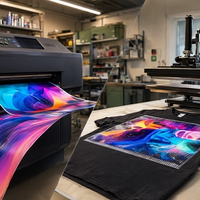
You already own a sublimation printer. A customer wants a vivid print on a black cotton tee, and you want to know whether direct-to-film (DTF) film can get you there without a second machine.
DTF PET Film Explained: Structure, Types & Buying Guide
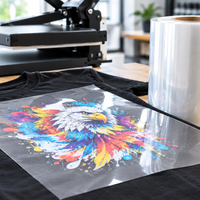
Almost every DTF film listing you open says the same thing in the spec line: PET.
Glitter & Specialty DTF Films: Types, Uses & Buying Guide
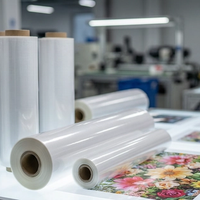
Glitter DTF film pulls about 170 US searches a month. Glow-in-the-dark follows at 90, and reflective at 50 (Lorin Transfer keyword research, Google Ads data, Oct 2026).