Glitter & Specialty DTF Films: Types, Uses & Buying Guide

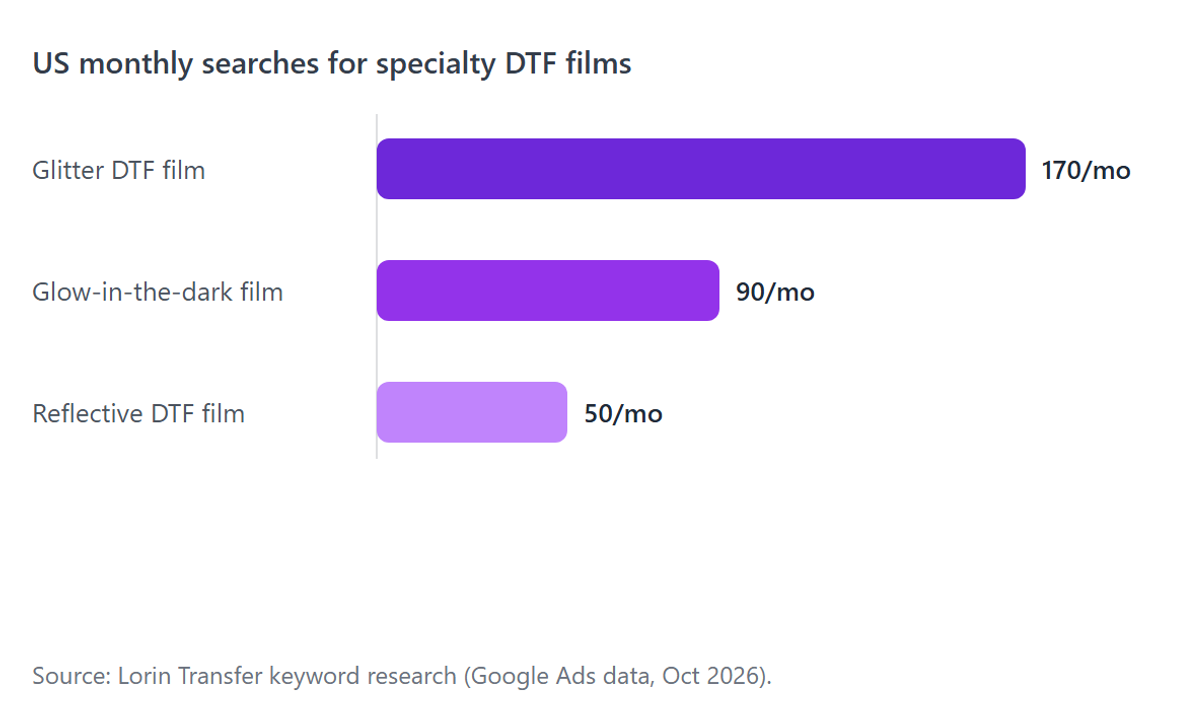
Glitter DTF film pulls about 170 US searches a month. Glow-in-the-dark follows at 90, and reflective at 50 (Lorin Transfer keyword research, Google Ads data, Oct 2026). The demand is real — but most guides on specialty films run a few hundred words and stop before the questions a print shop actually has.
Which effects are worth stocking? How does each one behave with your ink, powder, and press? What should you test before a production run?
We coat direct-to-film (DTF) film in Xiamen and ship it to print shops across the US and EU, so specialty requests cross our desk daily. This guide covers six specialty types, what each is best for, and how to stock them without tying up cash in the wrong effects.
Key Takeaways
Specialty films change the finish, not the process: every effect runs through the standard DTF workflow of pigment ink, film, powder, and press.
Glitter leads US demand at about 170 searches a month, ahead of glow-in-the-dark at 90 and reflective at 50 (Lorin Transfer keyword research, Google Ads data, Oct 2026).
Glitter demand peaks September through November and bottoms out in spring (Lorin Transfer keyword research, Google Ads data, Oct 2026), so plan holiday stock early.
Test every specialty film with your own ink, powder, and press setup before committing to a production run.
We produce six specialty lines: glitter, glow-in-the-dark, reflective (silver and rainbow), gold and silver foil, chameleon, and temperature-change.
What Counts as a Specialty DTF Film?
A specialty DTF film is a standard transfer film with an effect built into the film or its coating: flecks that sparkle, pigment that glows, elements that reflect light, or layers that shift color. The effect is part of the film, so it releases onto the garment along with your print. On standard film, the only finish choice is matte vs glossy finishes; specialty film adds effects on top of that baseline.
What doesn't change is the process. Specialty films run through the standard DTF workflow: pigment ink printed onto film, powder applied, then heat press. We coat these films in Xiamen, and the differences that matter in production show up in surface texture, powder pickup, and peel behavior, not in how you run the printer.
One naming note: raised or puff effects come from specialty powder, not from a film, so they sit outside this list.
1. Glitter DTF Film — Best for Sparkle-Led Streetwear & Kids' Apparel
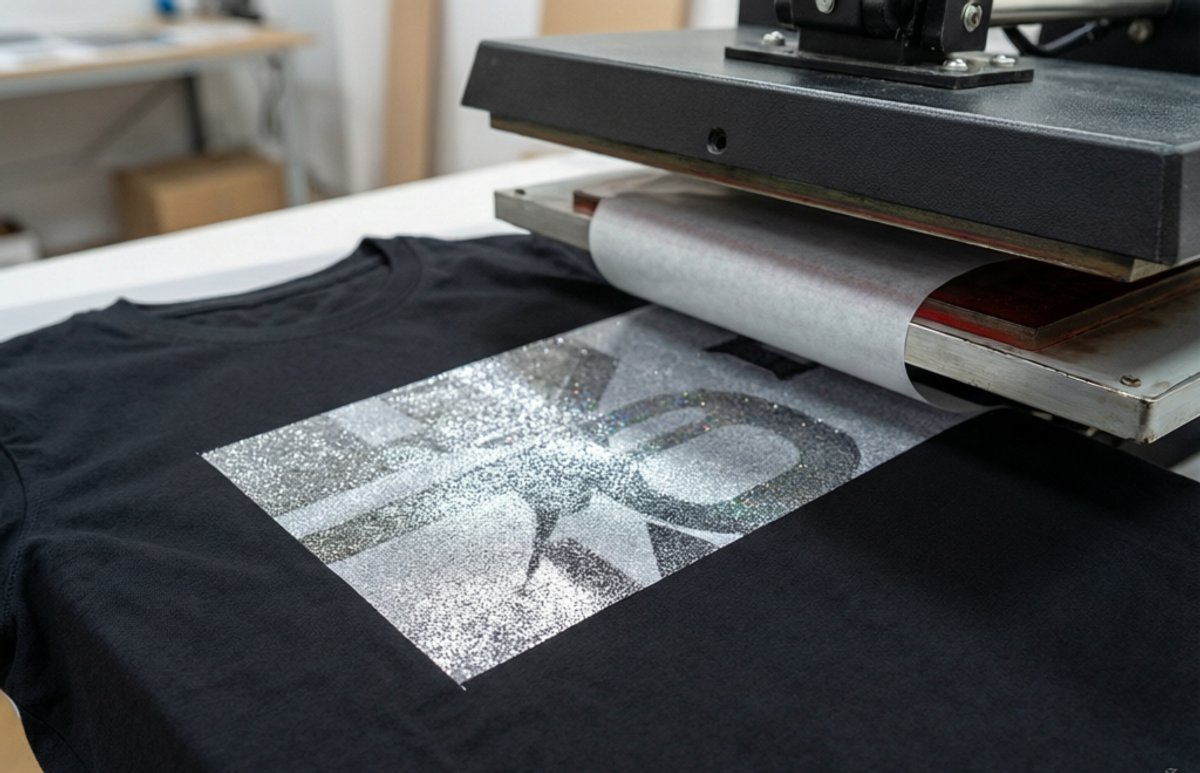
Glitter DTF film carries metallic or holographic flecks inside the film, so a single print pass delivers the sparkle that would otherwise take specialty ink, glitter powder, or an extra decoration step.
It's the most-searched specialty film in this category and carries the clearest commercial pull of any effect we coat (Lorin Transfer keyword research, Google Ads data, Oct 2026). Streetwear brands use it for statement graphics, and kids' apparel buyers use it for names and logos that pop on dark garments.
Best for: sparkle-led streetwear graphics, kids' apparel, and event merch where the glitter is the design.
One practical detail: fleck size and finish vary between builds, and heavier glitter surfaces can change how powder pickup behaves, so pull a test piece with your own powder before a full run.
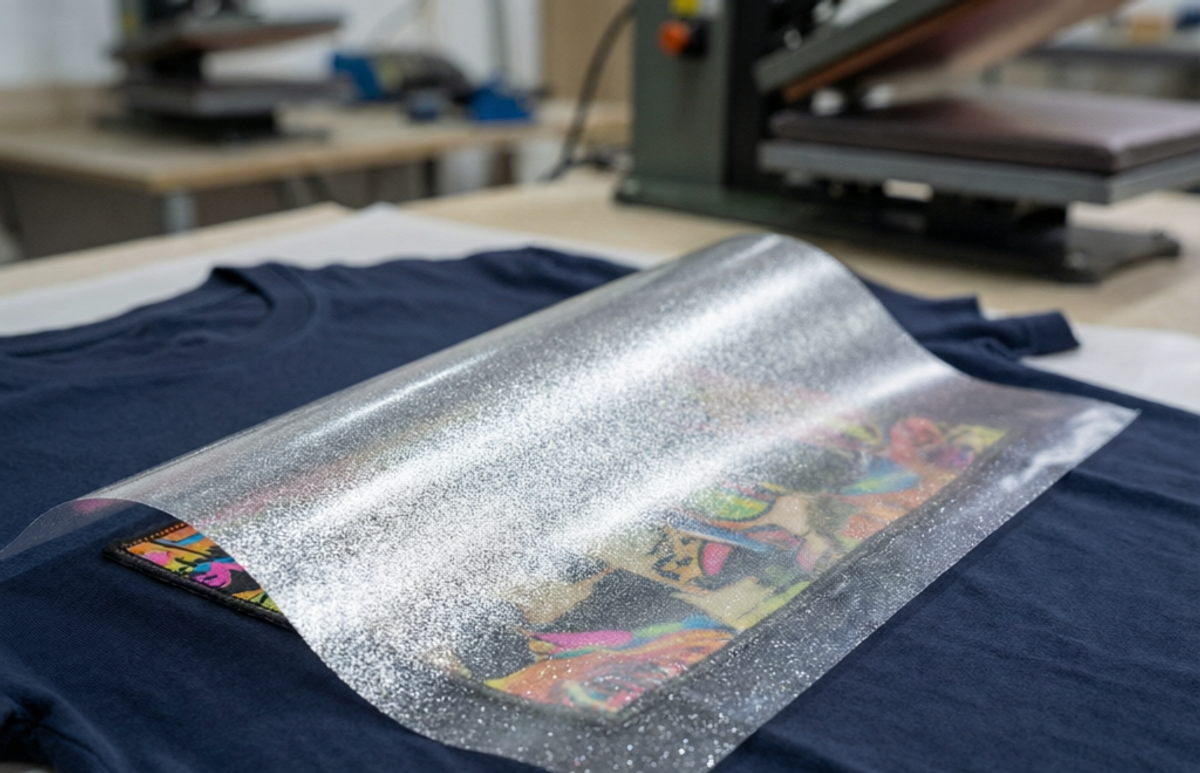
Availability: glitter film comes in DTF film rolls (30 cm and 60 cm widths, 100 m per roll) and A3, A4, and 13×19 inch sheet packs, with hot, cold, or instant peel depending on the build. Samples ship via quote.
2. Glow-in-the-Dark DTF Film — Best for Halloween & Night-Time Prints
Glow-in-the-dark DTF film carries phosphorescent pigment in the film layer, so printed areas charge under light and glow softly once the lights go down.
It's the Halloween staple: trick-or-treat tees, party merch, and staff apparel for haunted houses and night events. Glow effects read best on dark garments, where the glow contrasts with the base color, and they draw steady demand from a smaller pool of buyers than glitter.
Best for: Halloween drops, night-time events, kids' apparel, and any print designed to shine after dark.
Glow brightness depends on how much light the print takes in before it's shown, and the effect softens gradually with wear and repeated washing. Set expectations early, and care for glow prints the way you care for any DTF transfer (how DTF prints hold up in the wash).
Availability: 30 cm and 60 cm rolls (100 m each), A3/A4/13×19 in sheets, and hot, cold, or instant peel by build; samples via quote.
3. Reflective DTF Film — Best for Safety Workwear & Tech-Wear
Reflective DTF film uses retroreflective elements that bounce light back toward its source, so the print lights up when a headlight, phone flash, or camera flash hits it.
That behavior makes it a natural for safety and hi-vis workwear, where prints need to read in low light, and it has a second life in tech-wear and streetwear, where the graphic stays subtle in daylight and flashes on camera. Silver is the workwear standard, and rainbow reflective builds push the effect toward fashion.
Best for: safety and hi-vis workwear, jackets, tech-wear, and running gear where visibility is part of the design.
Reflective film looks muted under flat indoor light, so approve designs with a flash photo, not a showroom glance. The print has to work in two states: dim until light hits it, bright when it does.
Availability: the same roll and sheet range, 30 cm and 60 cm by 100 m plus A3, A4, and 13×19 inch sheets, with hot, cold, or instant peel by build; samples via quote.
4. Gold, Silver & Metallic Foil Films — Best for Premium & Sports Prints
Gold, silver, and metallic foil films produce a mirror-like finish straight off the press, with no separate foil lamination step.
The look reads premium. The classic jobs are team names and numbers on jerseys, branding on hoodies and caps, and limited drops that need a metallic statement. Where glitter says party, foil says podium: this is the effect buyers choose when a print should feel expensive.
Best for: premium fashion branding, sports jerseys and numbers, and limited drops that call for a metallic statement.
One practical detail: metallic finishes change how small details read, so keep type and fine lines on the bold side and check a proof before a full run. If a design is detail-heavy, print it on standard film for comparison.
Availability: 30 cm and 60 cm rolls at 100 m, A3, A4, and 13×19 inch sheets, and hot, cold, or instant peel options by build. Samples ship via quote.
5. Chameleon & Temperature-Change Films — Best for Novelty & Interactive Prints
Chameleon film shifts color as the viewing angle changes, and temperature-change film shifts color as it warms or cools, so the print reacts to how people move around it or touch it.
Both are novelty and interactive effects, and that's their selling point: limited-edition merch, event tees, kids' products, and demo pieces that invite people to touch the print. Search demand for these effects is thinner than glitter's, but they create products that get shared, which matters to brands chasing attention more than volume.
Best for: novelty and interactive prints, limited drops, event merch, and products built to start conversations.
Temperature-change prints need contrast to read clearly, and chameleon effects depend on light angle and base fabric color, so test on the actual garment you plan to sell.
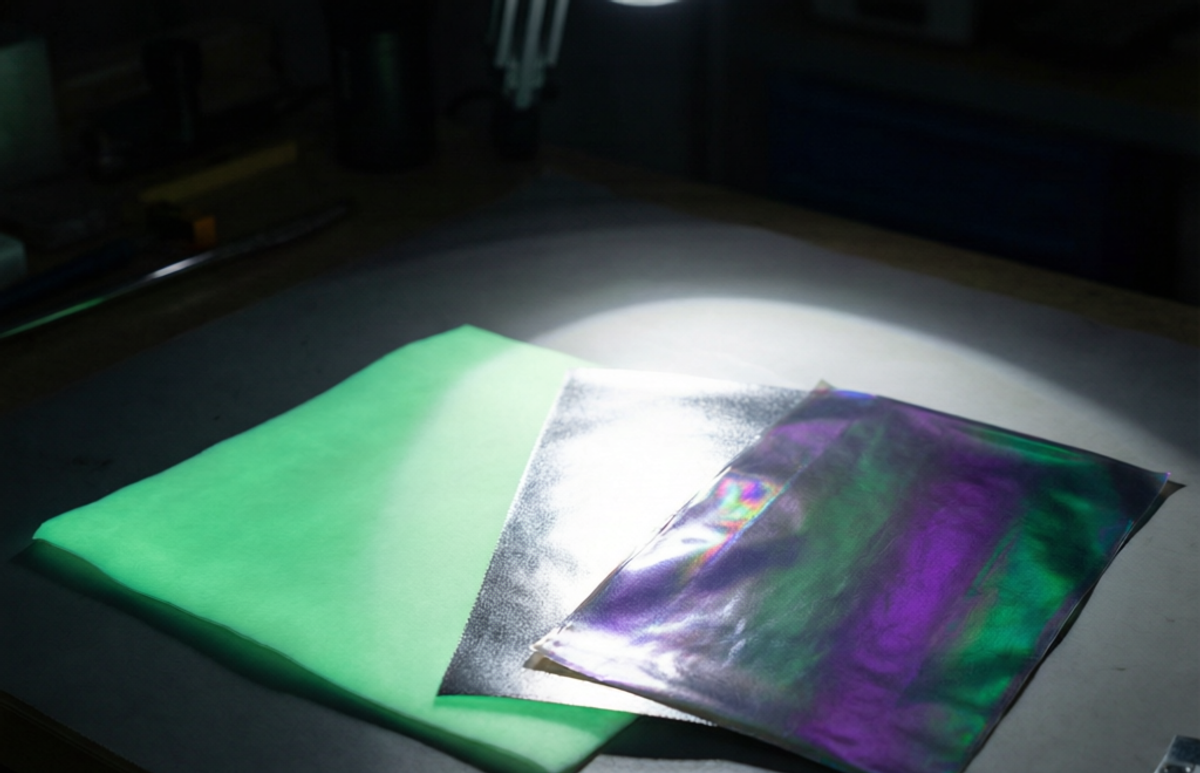
Availability: 30 cm and 60 cm rolls at 100 m, A3, A4, and 13×19 inch sheets, with hot, cold, or instant peel depending on the build, and samples via quote.
6. UV DTF Effects
UV DTF is a different product line with its own film. Instead of pigment ink plus powder, it pairs a specialty film with UV-curable ink, and the finished design transfers like a decal — no powder step. That makes it the practical route for hard surfaces, curved items, and small products a heat press can't reach. If you're weighing the two processes, UV DTF vs traditional DTF breaks down where each one fits.
How to Choose: Quick Comparison
Start with the effect your customers actually ask for, then confirm peel behavior and format. This table sums up the specialty film lines we produce — plus the UV DTF decal line — and where each one fits.
| Film | Best For | Peel Options | Formats | Care Notes |
|---|---|---|---|---|
| Glitter | Streetwear graphics, kids' apparel, event merch | Hot / cold / instant (by build) | 30/60 cm rolls; A3/A4/13×19 in sheets | Test powder pickup; standard DTF care |
| Glow-in-the-Dark | Halloween, night events, kids' apparel | Hot / cold / instant (by build) | 30/60 cm rolls; A3/A4/13×19 in sheets | Glow fades gradually over time; standard DTF care |
| Reflective (silver and rainbow) | Safety workwear, hi-vis, tech-wear | Hot / cold / instant (by build) | 30/60 cm rolls; A3/A4/13×19 in sheets | Needs direct light to show; standard DTF care |
| Gold/Silver Foil and Metallic | Premium branding, sports numbers | Hot / cold / instant (by build) | 30/60 cm rolls; A3/A4/13×19 in sheets | Keep artwork bold; standard DTF care |
| Chameleon and Temperature-Change | Novelty, interactive, limited drops | Hot / cold / instant (by build) | 30/60 cm rolls; A3/A4/13×19 in sheets | Test on final garment color; standard DTF care |
| UV DTF Effects | Hard surfaces, curved items | Not applicable (UV DTF line) | UV DTF film formats | Care varies by substrate; test adhesion first |
Methodology: this comparison reflects the specialty effects we produce at Lorin Transfer and the US search demand figures from our own keyword research (Google Ads data, Oct 2026). It's based on product specs and search data, not hands-on durability testing, so the care guidance stays general. The final check is always your own test print.
Buying & Stocking Specialty Films
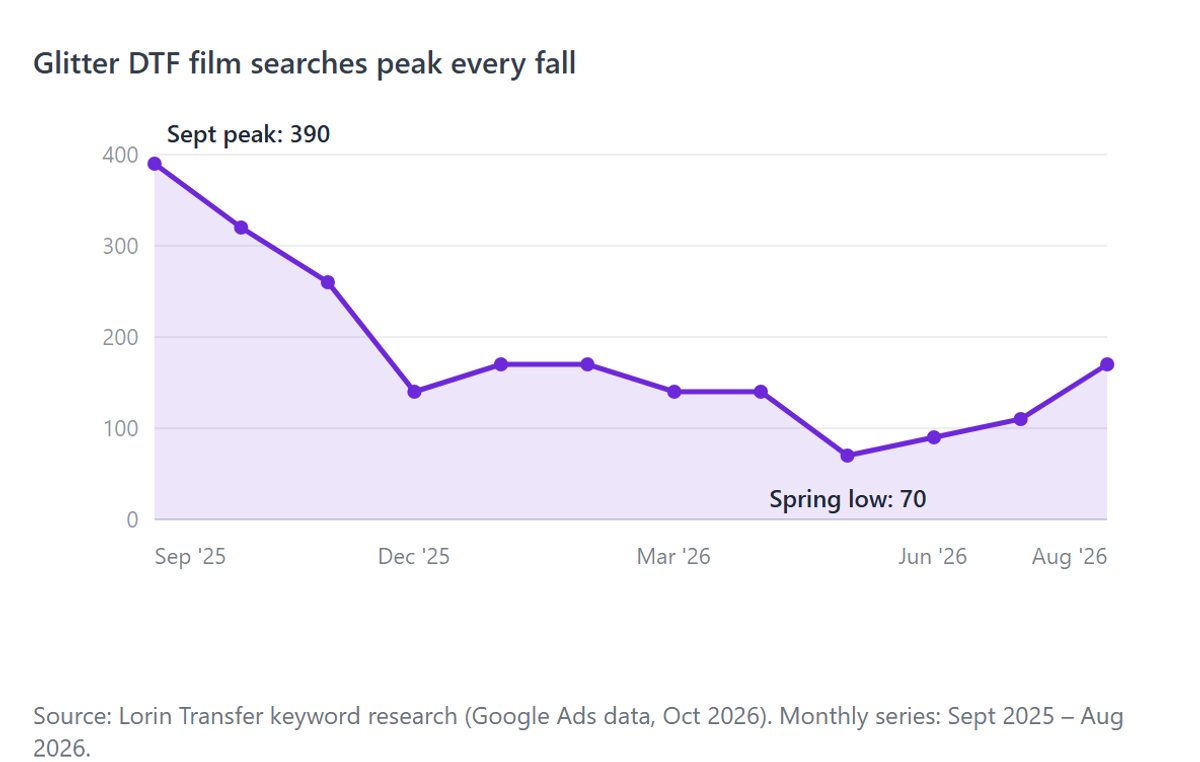
Specialty demand is seasonal, and glitter leads the calendar. In our keyword data, glitter searches climb to about 390 in September (2025) and sink to roughly 70 in spring, with the peak running September through November (Lorin Transfer keyword research, Google Ads data, Oct 2026). If Q4 and Halloween are part of your business, that's your stocking clock: commit to film orders before the season starts, because overseas production and shipping take planning.
Sample before you stock. A small mixed order lets you run glitter, glow, reflective, foil, and chameleon builds through your own ink, powder, and press, and every effect has quirks that only show up in a test print. Effects you can't reproduce consistently won't sell for long.
Start narrow and widen. Glitter is the safe anchor SKU given its search volume, so add one or two effects that match your customers, then let reorders guide the rest. Thirty and sixty centimeter rolls cover most production shops, while sheets suit sampling and short flash runs. When volumes justify it, sourcing DTF film in bulk covers cartons, pallets, and price ladders.
Conclusion
Specialty DTF film lets a shop add sparkle, glow, reflection, and color shift without changing its core process, which is exactly why the category deserves testing. Glitter is the demand leader, glow-in-the-dark and reflective serve seasonal and workwear buyers, and foil, chameleon, and temperature-change effects give you premium and novelty options for the right customer.
The next step is hands-on: pick two or three effects that fit your market, test them with your own consumables, and stock what proves out. To request samples and a quote, tell us which builds you want to try and the widths or sheet sizes you run.
FAQ
Do specialty films need a different powder?
Should I choose hot or cold peel for specialty films?
Can I use DTF film for sublimation?
What is the best DTF film to buy?
Contact Us
Tell us your requirements and our team will get back to you within 24 hours.

Ellen Lin
Product Manager & Heat Transfer Materials Specialist
Ellen Lin is a Product Manager at LorinTransfer, specializing in heat transfer materials, DTF printing solutions, and UV DTF transfer products. With hands-on experience in product development and market research, Ellen works closely with manufacturing teams and printing professionals to improve product performance, application methods, and customer solutions. She shares insights on transfer printing technologies, material selection, and industry trends to help businesses make better decisions for their printing projects.
Related Articles
Can You Use DTF Film in a Sublimation Printer? Honest Answer
You already own a sublimation printer. A customer wants a vivid print on a black cotton tee, and you want to know whether direct-to-film (DTF) film can get you there without a second machine.
DTF PET Film Explained: Structure, Types & Buying Guide
Almost every DTF film listing you open says the same thing in the spec line: PET.
How to Source DTF Film Wholesale: A 2026 Buyer's Playbook
You're printing more DTF than ever, your film bill keeps growing, and the quotes you get from resellers all start to look the same — marked up 30% or more over