Can You Use DTF Film in a Sublimation Printer? Honest Answer

You already own a sublimation printer. A customer wants a vivid print on a black cotton tee, and you want to know whether direct-to-film (DTF) film can get you there without a second machine.
Search YouTube and you'll find clips showing sublimation ink printed onto DTF film, powder added, and a shirt pressed. The comments argue about whether it works. The videos almost never explain what the process can't do.
We coat DTF film in Xiamen and ship it to print shops across the US and EU, and this is one of the questions we hear most often. Below is the straight answer, the chemistry behind it, and the options that actually work.
Key Takeaways
No. A sublimation printer cannot run a true DTF workflow. DTF needs pigment ink, a film coating built for that ink, and hot-melt powder.
Sublimation ink is a disperse dye. It bonds to polyester and coated surfaces. It carries no white, so it can't put light artwork on a dark cotton shirt.
The "sublimation DTF hack" is a light-fabric workaround, not a DTF process. Reports describe faint results on light polyester blends and poor wash performance (reported by Winnerjet, Sept 2026).
Your options are a proper DTF setup, ready-to-press transfers from a supplier, or staying in sublimation if everything you print is polyester.
Quick Answer
No. A sublimation printer cannot run a true DTF workflow. DTF prints pigment ink onto a coated film, adds a hot-melt powder, and presses the result into fabric. Sublimation turns a dye into gas and drives it into polyester. Different inks, different media, different chemistry.
This matters most if you're deciding whether to buy a DTF printer. It also matters if you're hoping a shortcut will cover the cotton and dark-garment jobs you keep turning down. The table below is the short version.
| Feature | DTF | Sublimation |
|---|---|---|
| Ink type | Pigment DTF ink | Disperse dye ink |
| Bonds to | Cotton, polyester, blends, and most fabrics | Polyester and polymer-coated surfaces |
| White ink / dark garments | White underbase, so dark garments work | No white, so light artwork on dark fabric disappears |
| Powder step | Hot-melt powder and a cure | None, just heat |
| Best for | Cotton and dark garments, short runs | All-over polyester, sportswear, mugs, coated blanks |
How DTF Actually Works: Pigment Ink, Film, and Powder
DTF runs on three consumables designed as a set, and each one depends on the others.
Pigment ink. DTF ink carries pigment particles rather than dissolved dye. The film holds those particles on its surface so they can transfer later.
Film. The film is a PET base with a release layer and an ink-side coating. That coating accepts pigment ink and releases cleanly under heat. We coat DTF film in Xiamen, and the coating decides two things: whether ink sits correctly and whether powder grips.
Powder. Hot-melt powder goes onto the wet print, then melts and cures. It becomes the adhesive that bonds the design to fabric. On dark garments, the white ink layer under the color gives the opacity. The powder carries both layers onto the shirt.
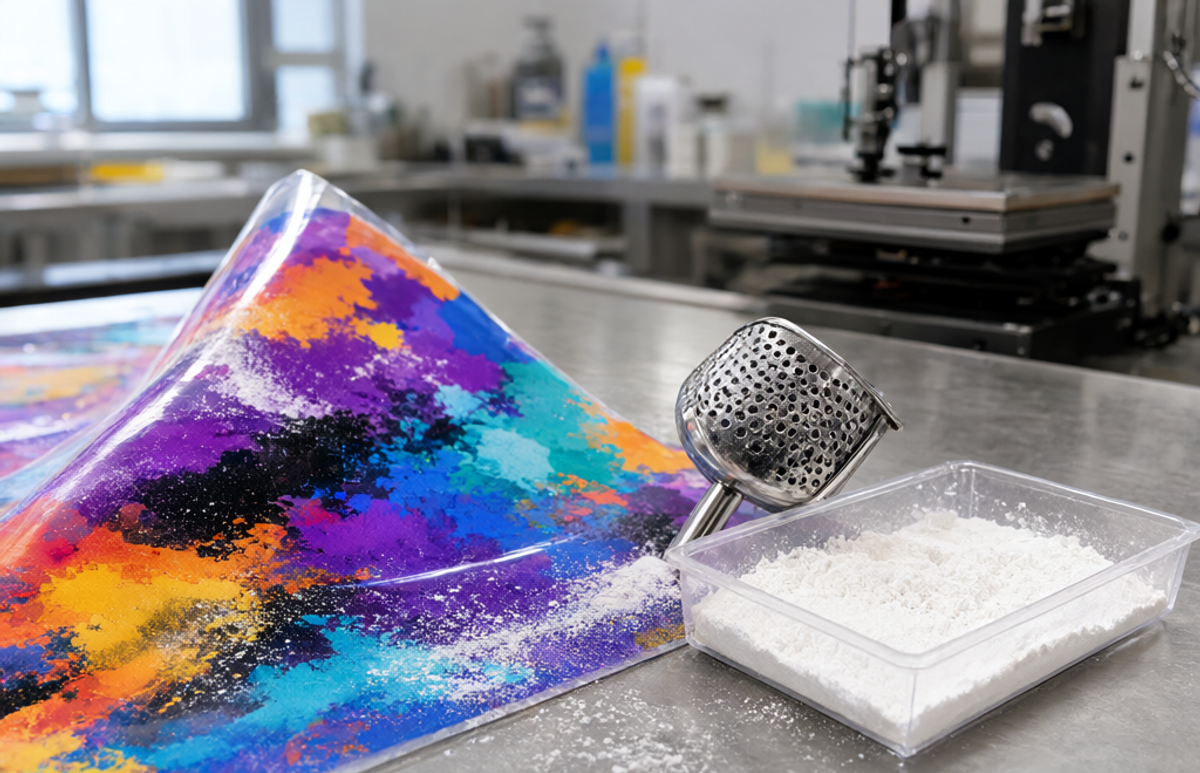
Press the powdered film onto a shirt. The adhesive melts into the fibers, and the release layer lets the film peel away. The result works on cotton, polyester, blends, and most other fabrics. It doesn't need a pretreatment step.
For the order of operations, the DTF workflow step by step covers each stage. DTF ink and powder, explained goes deeper on matching ink, film, and powder.
How Sublimation Printing Works
Sublimation works without powder because it never transfers a film. A sublimation printer loads disperse dye ink and prints onto transfer paper or a coated blank. Heat does the rest. The dye turns to gas and bonds with polymer fibers, so the color sits inside the material, not on top.
That's why cotton fails on its own. Cotton has no polyester or polymer coating for the dye to bond into, so the print has nothing to grab. Colors can look fine coming off the press, then fade with handling and washing. DTF exists as a separate process for exactly this reason. It puts a pigmented layer on top of the fabric instead of asking the fabric to absorb dye.
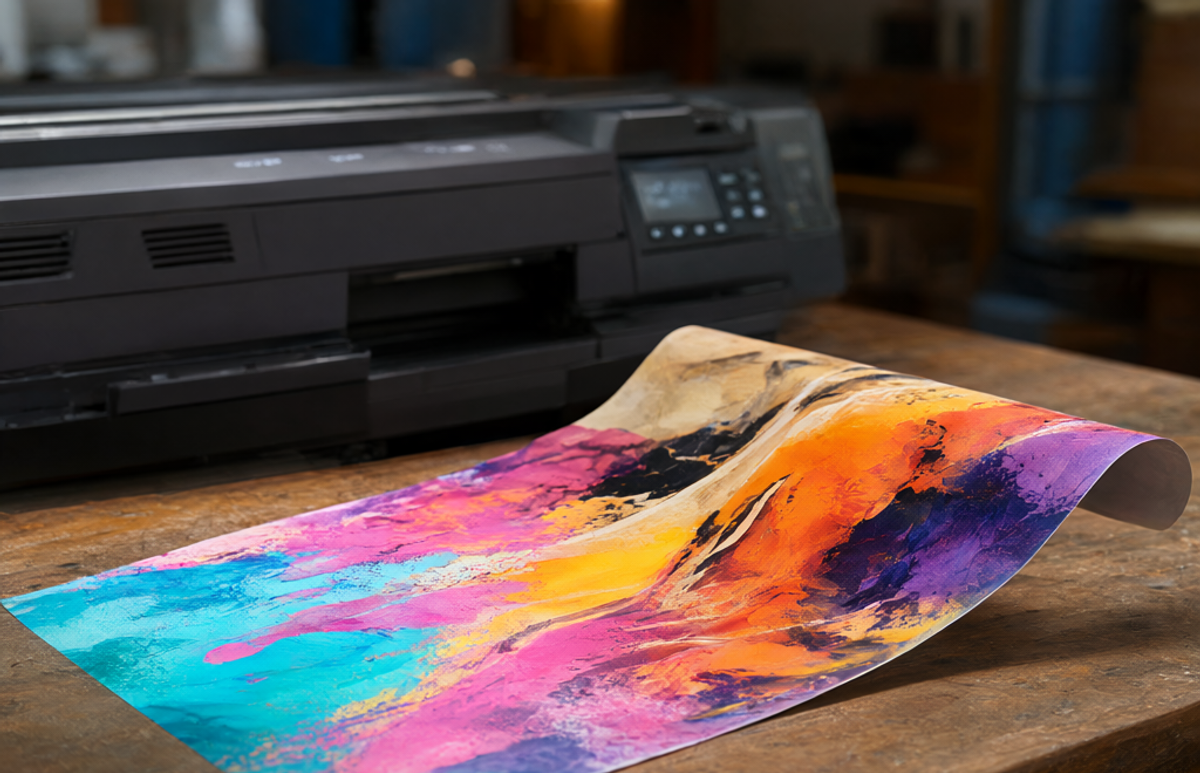
There's no white ink in the set, either. Sublimation printers don't carry white ink the way DTF printers do. Light artwork has no base under it, so it won't show on a dark garment. Light polyester stays the safe zone. Dark cotton is where the process stops.
What to Do Instead: Three Real Paths
If you need DTF results, there are three honest routes. Pick by what you print and how much of it you print.
1. Build a real DTF setup. A working DTF line means a printer running DTF pigment ink, DTF film, hot-melt powder, and a press. The hardware matters, and so does the consumable side. Our guide to which printers run DTF film covers the machine question.
2. Buy ready-to-press transfers. You don't need to own a DTF printer to sell DTF. Order transfers already printed and powdered, press them in-house, and skip the ink, the powder, and the maintenance. Margins are thinner per piece. The capital outlay is small, though, and you can test demand before committing to equipment. When volume grows, sourcing DTF film in bulk is the step after that, and our DTF film roll range covers carton and pallet quantities.
3. Stay in sublimation. If every job you take is polyester, you already own the right machine. A DTF press would mostly sit idle. Add one when cotton or dark garments become a real part of your order book. We'd rather tell you that than sell you film you don't need.
Bottom Line
A sublimation printer is a good machine for the work it was built to do. It is not a DTF printer. The two processes differ in ink chemistry, in what they bond to, and in whether a white layer exists at all. No setting or film swap closes that gap.
If you print polyester, keep the sublimation setup and stop worrying about DTF. If cotton and dark garments keep arriving, pick a DTF path: your own printer or ready-to-press transfers. To request film samples or a quote, tell us what you print and which printer you run. We'll point you to the right film, or tell you that you don't need it.
FAQ
Can You Use Sublimation Ink on DTF Film?
Can You Run DTF Film Through a Sublimation Printer?
What About the "Sublimation DTF Hack" Videos?
Can You Do DTF on Sublimation Tumblers?
Is It Worth Buying a DTF Printer?
Contact Us
Tell us your requirements and our team will get back to you within 24 hours.

Ellen Lin
Product Manager & Heat Transfer Materials Specialist
Ellen Lin is a Product Manager at LorinTransfer, specializing in heat transfer materials, DTF printing solutions, and UV DTF transfer products. With hands-on experience in product development and market research, Ellen works closely with manufacturing teams and printing professionals to improve product performance, application methods, and customer solutions. She shares insights on transfer printing technologies, material selection, and industry trends to help businesses make better decisions for their printing projects.
Related Articles
DTF PET Film Explained: Structure, Types & Buying Guide
Almost every DTF film listing you open says the same thing in the spec line: PET.
Glitter & Specialty DTF Films: Types, Uses & Buying Guide
Glitter DTF film pulls about 170 US searches a month. Glow-in-the-dark follows at 90, and reflective at 50 (Lorin Transfer keyword research, Google Ads data, Oct 2026).
How to Source DTF Film Wholesale: A 2026 Buyer's Playbook
You're printing more DTF than ever, your film bill keeps growing, and the quotes you get from resellers all start to look the same — marked up 30% or more over