DTF vs HTV: Which Heat Transfer Method Is Right for Your Business?

Ask a dozen decorators "DTF or HTV?" and you will get confident answers in both directions. The reason is simple: there is no universally better method. DTF (direct-to-film) and HTV (heat transfer vinyl) solve different problems, and shops that grow fastest usually stop treating them as rivals.
The short version: DTF handles full-color, detailed, and photographic artwork with no cutting or weeding, and it works across most fabric types. HTV is faster and cheaper for simple one- or two-color text, names, numbers, and specialty finishes like glitter, metallic, or reflective that DTF cannot reproduce. Many established shops run both and pick the method per job.
This guide gives you a comparison you can actually decide from — how each method works, where each one wins and why, and a decision framework you can apply to your own order mix. It is written for print shop owners, POD sellers, and production managers comparing these two heat transfer options.
1. How DTF and HTV Work — Two Different Workflows
The two methods look similar on the surface — both end with a heat press — but the work happens in different places.
DTF is a print-and-press workflow. A design is printed in full color (CMYK plus white) onto a PET film, coated with hot-melt adhesive powder, cured, and then pressed onto the garment. The design complexity barely affects production time, because a photographic gradient prints as fast as a single-color logo. There is no cutting and no weeding.
HTV is a cut-and-weed workflow. Colored vinyl is cut into the design shape with a cutting machine, the excess is manually peeled away (weeding), and the remaining vinyl is pressed onto the garment. Multi-color designs mean cutting, weeding, and layering a separate piece for each color.
The practical difference: DTF moves complexity into the printing step, while HTV puts it in the cutting and weeding step. That single difference explains most of the trade-offs below.

2. DTF vs HTV at a Glance — Key Comparison
Use this table as a quick reference. Real-world results vary with material quality, press settings, and application, so treat the entries as directional, not absolute.
| Factor | DTF (Direct-to-Film) | HTV (Heat Transfer Vinyl) |
|---|---|---|
| Full-color / photographic designs | Yes — printed in one pass | Limited — colors are cut and layered |
| Gradients and fine detail | Yes | Difficult or impossible to reproduce cleanly |
| Simple one- or two-color text / logos | Good | Excellent — fast and clean |
| Specialty finishes (glitter, metallic, reflective, puff) | Limited | Excellent — wide range of specialty vinyl |
| Weeding required | No | Yes — time scales with design complexity |
| Fabric range | Wide — cotton, polyester, blends, and more | Good on cotton and polyester; less reliable on textured or stretchy items |
| Startup cost | Higher — printer, ink, powder, and film | Lower — cutter and vinyl |
| Per-unit cost on complex designs | Flat — complexity does not add labor | Rises — cutting and weeding scale with detail |
| Typical wash durability | Generally longer when pressed correctly | Good, but edge-lifting is more common over many washes |
3. Where DTF Wins — and Why
DTF is the stronger choice for work that HTV struggles with mechanically.
Full-color, detailed, or photographic artwork. Because the design is printed rather than cut, there is no color limit and no registration problem between layers. Gradients stay smooth, small text stays readable, and photographic elements hold detail.
Dark garments. DTF prints a white ink underbase, which keeps colors vivid on black and other dark fabrics without extra steps. With HTV, printing on dark fabric typically means adding white vinyl underneath colored layers, which adds time and stiffness.
A wide range of fabrics. DTF transfers generally bond to cotton, polyester, blends, and many other materials, which makes it convenient for shops that decorate mixed garment types rather than only cotton tees.
The mechanism behind the durability reputation: DTF's adhesive layer forms a flexible connection with the fabric, so the print moves with the garment instead of sitting on top of it as a separate stiff layer. That flexibility is one reason edge-lifting and cracking are less common than with layered vinyl, although results depend heavily on material quality and press settings.
If DTF is the right fit for your orders, the DTF film rolls you run are the consumable you will reorder most — which makes coating quality and batch consistency worth checking before you commit to a supplier.
4. Where HTV Wins — and Why
HTV remains the practical default for a specific set of jobs.
Names, numbers, and simple one- or two-color text. A jersey number or a one-color logo is a clean cut-and-press job. For on-demand personalization — a name on a shirt, a team number, a short text — HTV is fast, and it does not require owning a printer or managing ink.
Specialty finishes. Glitter, metallic, reflective, puff, and holographic vinyl are unique to HTV. These effects command a premium in team apparel, event merchandise, and fashion work, and DTF cannot replicate most of them.
Low startup budgets and one-off orders. A cutter and a heat press are a much smaller investment than a DTF printing setup. For shops that are just starting, or that mostly take single-color personalization orders, HTV can be profitable long before a DTF setup would pay for itself.
The reason HTV handles these jobs well is that cutting gives you precise, clean edges on solid color — something print processes do not automatically provide at the same crispness for simple shapes.
For HTV jobs, heat transfer vinyl is the material that determines how the finish looks, how it stretches, and how well it holds up over time.
5. How to Choose Based on Your Orders — A Practical Decision Framework
Instead of asking "which is better," ask "what do my orders actually look like?" Three variables do most of the work: design complexity, batch size, and how much of your work is simple personalization.
More than two colors, gradients, or photographic detail → DTF is usually the better fit, especially at any volume. The weeding that HTV would require grows with every added color and detail.
Simple one- or two-color text, names, and numbers → HTV is usually faster and cheaper per piece, and it makes on-demand personalization easy.
A mix of both → Most shops land here eventually. The common pattern is DTF for full-color front logos and detailed graphics, HTV for names, numbers, and specialty accents.
Specialty effects are a selling point → HTV specialty vinyl is the way to get glitter, metallic, reflective, or puff finishes.
(Illustrative example: a shop that takes a 200-piece full-color team order and a 12-piece name-and-number add-on can run the front graphics as DTF transfers and the names and numbers in HTV — using each method for the part it does best, without forcing either job into the wrong workflow.)
If you are still deciding, test both with your most common design: run one order through each workflow and compare the finished feel, the time it took, and the cost per garment for that specific design. That comparison is more reliable than any general rule.
6. Combining DTF and HTV on the Same Garment
The best-known answer in modern apparel decoration is often "use both." Two combinations show up repeatedly in shops that have grown past choosing one method.
Split by placement. Run the full-color front logo as a DTF transfer, then apply player names, numbers, or sleeve details in HTV. This is a common pattern for team uniforms and event apparel, where each placement has different requirements.
Layered hybrid. Press a layer of specialty HTV — glitter, puff, or holographic — as a textured base, then apply a DTF transfer on top for full-color detail. This creates a dimensional effect that neither method produces alone, and it is a strong niche for premium streetwear and specialty merchandise.
There is also a practical supply-chain angle for buyers: if you use both methods, sourcing film and vinyl from the same supplier simplifies ordering and keeps material specs consistent. A supplier that stocks both product lines can usually help you match film and vinyl to the same press settings.
7. DTF vs HTV for Growing Businesses — Cost, Consistency, and Scale
For businesses that are past the occasional-order stage, the economics change shape.
Cost crossover. HTV looks cheaper at first because the startup cost is low. But per-unit cost behaves differently as volume and complexity grow. HTV material cost rises with each added color, and cutting and weeding add labor that scales with design detail. DTF has a higher entry point — printer, ink, powder, and film — but the per-transfer cost is roughly flat regardless of how many colors the design has. For full-color work at any real volume, the crossover usually favors DTF; for simple low-volume personalization, HTV usually stays cheaper.
Production pace.HTV's bottleneck is not the press — it is the weeding step before it, which gets slower as designs get more detailed. DTF removes that step entirely, so throughput scales with printer and press capacity rather than manual work.
Consistency. If you are running repeat orders, ask how consistent the material is between batches. A transfer material that changes behavior between rolls or sheets forces you to re-tune settings and re-run test pieces. This matters for both DTF film and HTV, and it is worth confirming before scaling up a supplier.
Equipment reuse. One point that helps DTF adoption: if you already own a heat press for HTV, you can press DTF transfers with the same machine. You do not need to buy a printer if you order transfers printed by a supplier — which is how many shops add full-color capability without the equipment investment.
Conclusion
DTF and HTV are not competing answers to the same question — they are two tools for different jobs. DTF wins on full-color detail, dark garments, fabric range, and production speed at volume. HTV wins on simple text and numbers, specialty finishes, and low-cost entry. The shops that profit most are the ones that match the method to the order, and many end up running both.
LorinTransfer supplies both product lines: double-sided matte DTF film rolls for print-on-demand and production use, and PU/PVC heat transfer vinyl for names, numbers, and specialty finishes. If you are comparing materials for your own workflow, request a film sample and a vinyl swatch, or contact LorinTransfer to discuss your requirements.
FAQ
Is DTF or HTV better for full-color designs?
Which lasts longer after washing — DTF or HTV?
Is HTV cheaper than DTF?
Can I use DTF and HTV on the same garment?
Which is better for team uniforms and sportswear?
Contact Us
Tell us your requirements and our team will get back to you within 24 hours.

Ellen Lin
Product Manager & Heat Transfer Materials Specialist
Ellen Lin is a Product Manager at LorinTransfer, specializing in heat transfer materials, DTF printing solutions, and UV DTF transfer products. With hands-on experience in product development and market research, Ellen works closely with manufacturing teams and printing professionals to improve product performance, application methods, and customer solutions. She shares insights on transfer printing technologies, material selection, and industry trends to help businesses make better decisions for their printing projects.
Related Articles
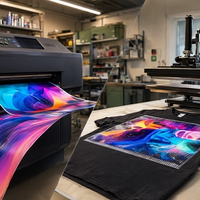
Can You Use DTF Film in a Sublimation Printer? Honest Answer
You already own a sublimation printer. A customer wants a vivid print on a black cotton tee, and you want to know whether direct-to-film (DTF) film can get you there without a second machine.
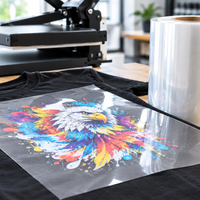
DTF PET Film Explained: Structure, Types & Buying Guide
Almost every DTF film listing you open says the same thing in the spec line: PET.
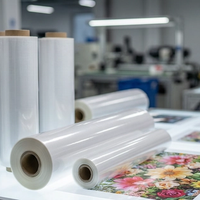
Glitter & Specialty DTF Films: Types, Uses & Buying Guide
Glitter DTF film pulls about 170 US searches a month. Glow-in-the-dark follows at 90, and reflective at 50 (Lorin Transfer keyword research, Google Ads data, Oct 2026).